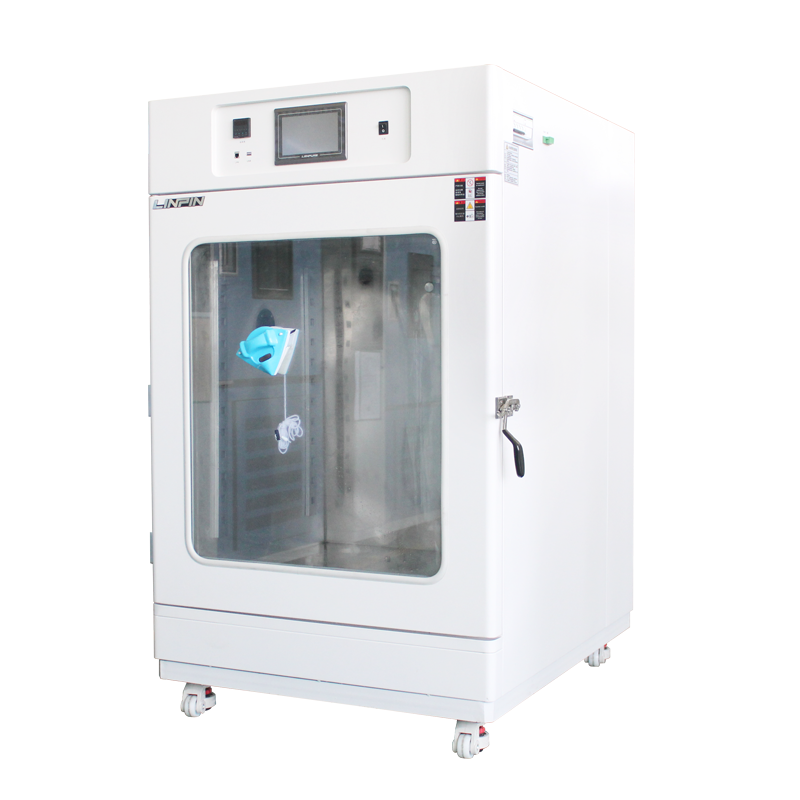
Salt spray test chambers serve as core testing equipment for evaluating material corrosion resistance, occupying a critical position in modern industrial quality assurance systems. By simulating marine atmospheric environments to accelerate material corrosion processes, these devices provide essential corrosion resistance performance data for the automotive, aerospace, electronic appliances, coatings and chemical industries, as well as major research institutions. The scientific determination of test results not only directly affects the accurate assessment of product quality grades, but also constitutes a crucial basis for enterprise technological improvement and product iteration.

I. Technical Principles and Standardization Requirements of Salt Spray Test Chambers
Salt spray test chambers generate a saturated environment containing salt-laden micro-droplets within a sealed test space by atomizing sodium chloride solution of a specific concentration. In accordance with domestic and international standards such as GB/T 10125 and ISO 9227, test temperature is typically controlled at 35℃±2℃, with salt spray sedimentation rate maintained within the range of 1-2ml/80cm2·h. This standardized environment can reproduce corrosion failure modes of materials in coastal regions, with test cycles ranging from 24 hours to thousands of hours, depending on material characteristics and product service environment requirements.
II. Four-System Framework for Test Result Evaluation Methods
(1) Rating Assessment Method
The rating assessment method is a quantitative evaluation approach based on the percentage of corroded area on the test sample. The specific procedure involves: after test completion, dividing the sample surface into 10 levels (Level 0-9), where Level 0 represents no corrosion phenomenon and Level 9 indicates corrosion area exceeding 50%. Evaluators must precisely measure the proportion of corroded area using standard reference charts or grid counting methods, selecting the most appropriate level as the final evaluation criterion. This method is applicable for quality acceptance of protective surface treatments such as coatings and platings, featuring strong intuitiveness and high comparability, with explicit specifications in GB/T 6461. In practical applications, qualification thresholds commonly adopt Level 7 (corrosion area not exceeding 0.25%) or Level 9 (corrosion area not exceeding 0.1%) as evaluation standards.
(2) Weighting Assessment Method
The weighting assessment method quantitatively evaluates corrosion degree through precise measurement of sample mass changes before and after testing. Implementation steps include: prior to testing, performing degreasing and drying treatment on samples, recording initial mass m? using an analytical balance with precision not less than 0.1mg; after testing, conducting standardized procedures including corrosion product removal, cleaning, and drying, then reweighing to obtain final mass m?. Mass loss Δm=m?-m? directly reflects material corrosion rate. This method is particularly suitable for corrosion resistance research on metallic substrates, with corrosion rate (g/m2·h) calculable per GB/T 16545 standards. Notably, for coated samples, this method may produce data deviations due to coating spalling, requiring comprehensive judgment combined with morphological observation.
(3) Corrosion Appearance Assessment Method
The corrosion appearance assessment method employs qualitative judgment criteria based on whether corrosion phenomena appear on sample surfaces, representing the most extensively applied rapid evaluation method in current industrial production. Assessment criteria include: within the specified test cycle, if no visually detectable corrosion spots, rust, blistering, or coating peeling occur on the sample surface, the result is deemed qualified; otherwise, it is unqualified. This method features simple operation and high evaluation efficiency, particularly suitable for quality sampling inspection in mass production. Per GB/T 1771 standards, observation must be conducted under standard lighting conditions, with 10× magnifiers employed for microscopic examination when necessary. For special products, additional assessment indicators such as corrosion product color and morphology may be specified.
(4) Corrosion Data Statistical Analysis Method
The corrosion data statistical analysis method processes multiple sets of test data using mathematical statistics principles to evaluate corrosion data confidence and reproducibility. Specific applications include: calculating standard deviation and coefficient of variation of corrosion rates, plotting corrosion depth-time curves, and establishing corrosion prediction models. Although not directly used for individual product quality determination, this method plays an irreplaceable role in new material R&D, process optimization, and life prediction. Through Analysis of Variance (ANOVA), significant effects of different process parameters on corrosion resistance can be identified, providing data support for quality improvement. This method complies with GB/T 6379 requirements regarding accuracy of measurement methods and results.
III. Technical Measures for System Error Control
To ensure test result accuracy and reproducibility, effective measures must be implemented to minimize systematic errors. The following three methods have demonstrated significant effectiveness in practice:
1. Metrological Traceability Correction Method
Regularly calibrate key parameter measurement instruments of salt spray test chambers (such as temperature sensors and sedimentation collectors) at nationally recognized metrology institutions to obtain correction values from calibration certificates. During test data processing, algebraic operations between measured values and correction values eliminate instrumental bias. A calibration cycle not exceeding 12 months is recommended, which should be shortened to 6 months for frequently used equipment. Simultaneously, instrument files should be maintained to record historical calibration data, analyze drift trends, and provide early warnings of potential failures.
2. Standard Sample Substitution Verification Method
Introduce standard samples with known corrosion resistance properties (such as CR4 grade cold-rolled steel plates) for parallel testing under identical test conditions. By comparing measured results of standard samples with standard reference values, test system accuracy can be evaluated. If deviations exceed allowable limits, process parameters such as salt solution concentration, pH value, and atomization pressure must be investigated. This method enables timely detection of abnormal test conditions, preventing systematic bias in batch sample data, and complies with GB/T 27025 requirements for laboratory quality control.
3. Symmetrical Test Balancing Method
When directional bias in test conditions is suspected, design two symmetrical tests: maintain consistent conditions except for altering a single variable that may produce error (such as sample placement angle or spray direction), causing error symbols in the two tests to be opposite. The arithmetic mean of both results serves as the true value estimate, effectively canceling systematic errors. For instance, placing identical samples at different heights inside the chamber—sedimentation rate differences between upper and lower positions cause opposite-direction corrosion rate deviations, and mean processing enhances data reliability.
IV. Critical Practical Application Considerations
Application of the above methodology system must adhere to the principle of “case-by-case specific analysis.” For automotive body panels, combination of rating assessment method and corrosion appearance assessment method is recommended; for marine engineering steel, weighting assessment method should be primary, supplemented by statistical analysis for life prediction. Professional training of operators is crucial, requiring proficiency in technical details of standards such as GB/T 10125 and ASTM B117. Furthermore, standardized operating procedures (SOP) should be established for sample preservation after testing, data recording formats, and uncertainty evaluation to ensure complete traceability and reproducibility throughout the test process.
The scientificity and accuracy of salt spray test chamber result evaluation depend on rational method selection and effective systematic error control. Rating assessment, weighting assessment, corrosion appearance assessment, and corrosion data statistical analysis methods constitute a comprehensive evaluation system, each applicable to different scenarios. Technical means including metrological traceability, standard substitution, and symmetrical testing can significantly enhance test data credibility. With future development of image recognition technology and artificial intelligence algorithms, automated evaluation systems will gradually replace manual rating; however, standardized fundamental principles and error control concepts will remain the cornerstone of quality assurance. Testing personnel should thoroughly understand the technical essence of various methods and apply them flexibly in practice to obtain reliable data closest to real service environments, thereby providing solid technical support for continuous product quality improvement.


25.03




Copyright ? 2025 Shanghai Linpin Instrument Co., Ltd Copyright
| ICP Number:Shanghai ICP Record No. 12029585-7
| Sitemap







 EN
EN
 中文
中文 Pусский
 Ti?ng Vi?t
 ???????
 ???????? ????


腐蝕試驗箱.png)